

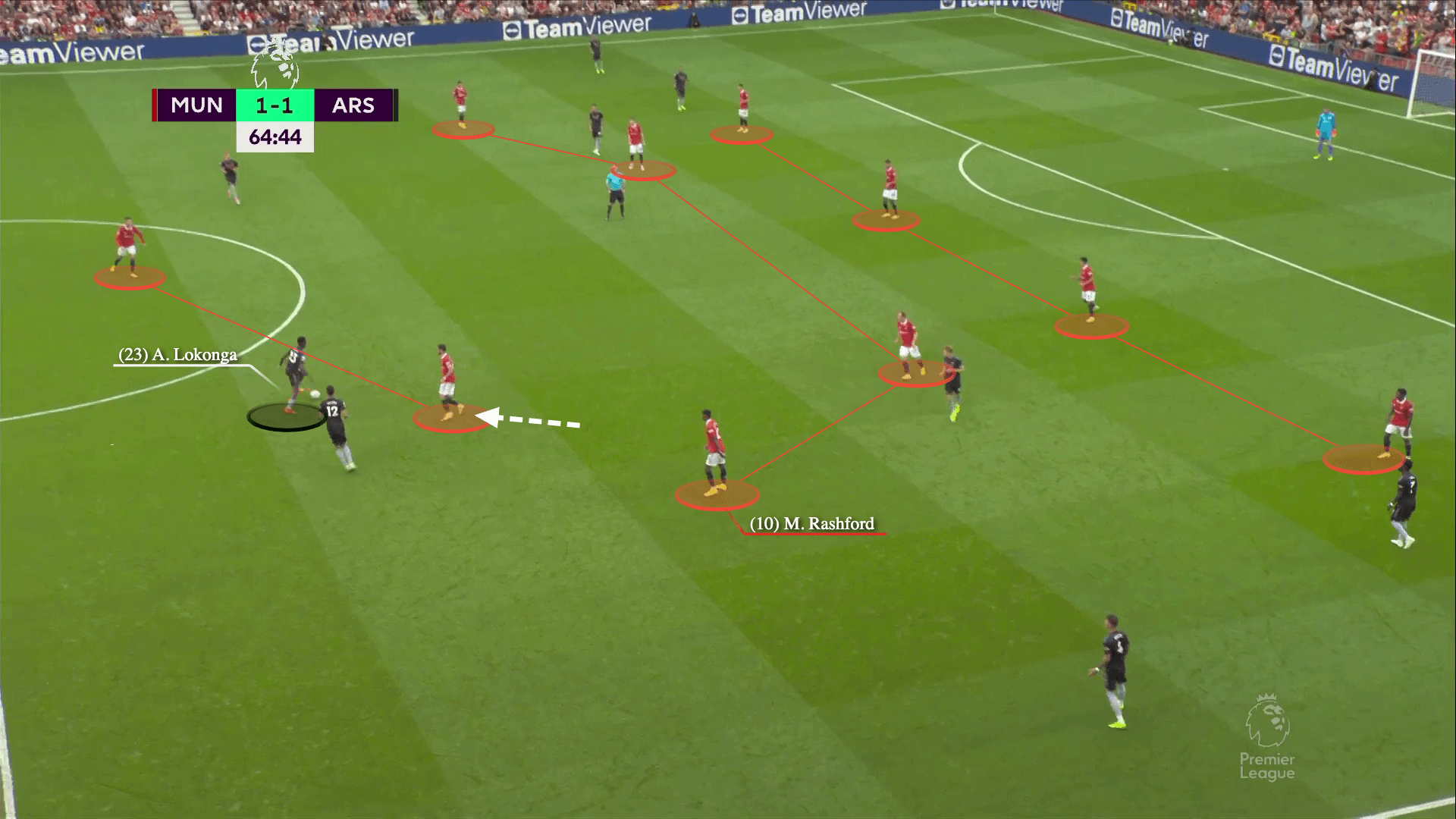
Calling a Premier League team “highly efficient on the counter” means more than saying they break quickly. It describes sides that repeatedly turn defensive moments into high‑quality transition chances with relatively few passes, and that finish those breaks at a higher rate than average. In the current league, the most effective counter-attacking outfits typically combine compact defensive shapes with explosive runners and direct vertical passing, allowing them to generate danger from positions where other teams would merely clear the ball.
What Counter-Attacking Efficiency Actually Involves
Counter-attacking efficiency starts with how often a team creates transition opportunities from regains, but its core is conversion: what share of those attacks become shots, and how good those shots are. Efficient teams limit themselves to a few clear decisions—forward pass, wide release, or carry into space—rather than slow combinations that let defenders recover. That directness shrinks decision trees for ball‑carriers and ensures runners know where to go as soon as possession turns over.
There is also a defensive side to this efficiency. Sides that sit compact in mid‑ or low blocks recover the ball where one pass can release a forward behind the opposition line. When distances between the back line, midfield and attackers are well calibrated, the same regain that might produce a harmless clearance for another team becomes the starting point for a three‑pass attack ending with a shot inside the box.
How Efficient Counter-Attacking Looks in Real Matches
In matches, efficient counter‑attacking teams show some clear visual patterns. When they win the ball, the first touch is rarely backwards; instead, the nearest player looks straight for a vertical lane or a wide runner sprinting into space. Forwards start their runs before the regain is fully secure because they trust team-mates to play quickly into predictable channels.
You also see very specific support behaviour. One runner attacks depth to pin defenders, a second trails slightly behind to receive cutbacks, and a third often arrives at the far post. The ball‑carrier’s job is not to beat many players but to commit one defender and release at the right time. Because movements are rehearsed, these teams often need only two or three passes to create a shot that carries higher expected‑goal value than an average settled attack, even if they have relatively little overall possession.
Mechanisms: Why Certain Premier League Teams Excel in Transition
The key mechanism is alignment between defensive structure and attacking weapons. Teams that defend compactly in their own half, allow opponents to push full‑backs high, and then spring into spaces behind them maximise the benefit of having fast forwards and direct passers. Their centre‑backs and holding midfielders are instructed to look forward immediately after regains, not to recycle and rebuild.
Player profiles matter as much as systems. Efficient counter‑attacking sides tend to field at least one very quick wide forward, a striker who can either run channels or hold up the ball for trailing runners, and midfielders capable of hitting accurate long passes under pressure. Without that combination, transition opportunities either stall through poor control or die in low‑percentage long shots from distance. Coaching then layers automation on top: repeated drills for 3v2 and 3v3 situations, with players learning preferred patterns so decisions become almost automatic at full speed.
Conditional Scenarios Where Counter-Attacking Becomes Most Dangerous
Counter‑attacking efficiency spikes in certain game states. When an opponent chases a goal and commits extra players forward, spaces open between its midfield and back line, and behind aggressive full‑backs. A well‑organised counter side will invite this pressure, happy to absorb crosses or lateral passes so long as it can launch runners into those fresh gaps once possession flips.
Transitions immediately after set pieces are another typical hotspot. When defending corners or attacking free kicks, efficient counter‑attacking teams leave fast players higher up the pitch, prepared to race into open grass if the initial delivery is cleared. Because many opponents keep slower defenders back in these situations, that first run often gains an immediate physical advantage. When this pattern repeats across matches, it becomes a structural weapon, not a one‑off surprise.
UFABET, Live Game Reading, and Interpreting Counter-Attacking Strength in Real Time
During live viewing on a betting environment or football betting website comparable to ufabet เข้าสู่ระบบ ล่าสุด, counter‑attacking efficiency is best treated as a dynamic factor that evolves with game state. In a live game / in‑play reading perspective, a user can track how often a team turns regains into organised breaks with runners in lanes versus isolated dribbles from deep. If one side repeatedly creates 3v3 transitions and arrives in the box within a few seconds of winning the ball, that pattern suggests its counter‑attacking structure is functioning well, and that late‑game goal probabilities may be higher than pre‑match numbers implied. Conversely, if a supposedly dangerous transition team keeps regaining possession but immediately passing backwards or losing control under minimal pressure, reputational expectations about its counters are not matching the on‑pitch reality. In that case, assuming a constant threat from counters can overstate its actual capacity to change the match quickly.
List: Practical Indicators That a Premier League Team Has an Efficient Counter-Attack
Because highlights can exaggerate individual moments, a structured checklist helps decide whether a team truly excels in transition or simply scored a few spectacular goals. Each indicator connects an observable behaviour or data pattern to a logical conclusion about counter‑attacking strength.
- Frequency of shots and big chances from fast breaks: look for sides that generate a significant share of their total shots from possessions starting in their own half and ending with a shot within a few passes; a high ratio indicates that transition situations are being converted into genuine danger rather than fizzling out.
- Speed and direction of first passes after regains: track whether the first or second pass after winning the ball is usually forward and into space, particularly towards wide runners or channels between centre‑back and full‑back; consistent verticality suggests clear counter‑attacking principles.
- Quality and pace of attacking personnel: assess whether the team fields at least one high‑pace wide forward, a striker comfortable in space, and midfielders who regularly complete long progressive passes; without these attributes, even well‑coached counters often lack end product.
- Structural balance when defending: observe if the team keeps at least one or two potential outlets higher up the pitch when in a low block, instead of dropping all eleven players deep; leaving advanced targets is a repeated hallmark of sides that treat counters as a main attacking route rather than an accident.
Together, these indicators provide a more reliable picture than raw goal counts alone, especially early in the season when a few transition finishes can distort statistics.
Where “High Counter-Attacking Efficiency” Labels Become Misleading
The label becomes misleading when it is anchored solely on memorable goals instead of repeated patterns. A mid-table team may score a handful of beautiful counters in televised matches, but if most of its regains still end in hopeful clearances, long shots or turnovers, its overall efficiency in transition remains average. Highlight bias then tricks analysts into overestimating its true threat.
It also fails when context is ignored. Counter‑attacks naturally look more dangerous against open, attack‑minded opponents that leave space; the same team may appear blunt when facing low blocks that rarely venture forward, simply because there is no grass to attack. Calling a side “elite on the break” without distinguishing which matchups allow that strength to surface overstates how universal the weapon really is. Tactical adjustments, squad changes and fatigue can further erode transition sharpness over time, so any assessment of counter‑attacking efficiency needs regular updating rather than relying on last season’s reputation.
Summary
Analysing Premier League teams through the lens of counter‑attacking efficiency means focusing on how consistently they convert defensive regains into high‑quality, fast‑paced chances rather than on isolated breakaway goals. The most dangerous transition teams align compact defensive structures, vertical passing and explosive forward profiles so that a few simple decisions after winning the ball often produce shots in prime locations.
By examining where regains occur, how quickly and directly the ball moves forward, which player types lead breaks, and how these patterns change with game state, observers can separate genuinely efficient counter‑attacking sides from those whose reputation rests on a handful of highlight‑reel moments. That distinction turns “great on the break” from a vague compliment into a grounded, tactical description of how certain Premier League teams repeatedly change games in seconds.
