
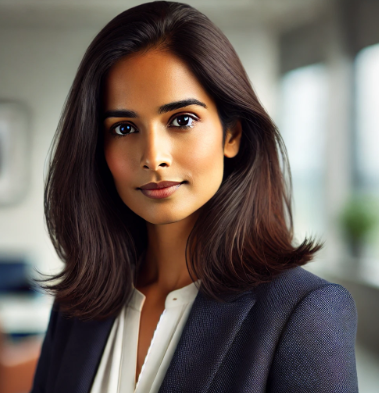
Lists of talking-photo tools and “prompt-free” editors tend to share one table. Upload a portrait, add text or audio, export a face that speaks. Or paint over an object without typing. Both are real features. Putting them in one “best of” ranking makes them sound like one studio.
They answer different questions. A talking photo asks a still to perform. A prompt-light edit asks a still to lose one mistake and keep everything else. A third job, often mixed in with face swap, is replacing the person while the scene stays. None of those is a reason to animate a mouth you do not have the right to move.
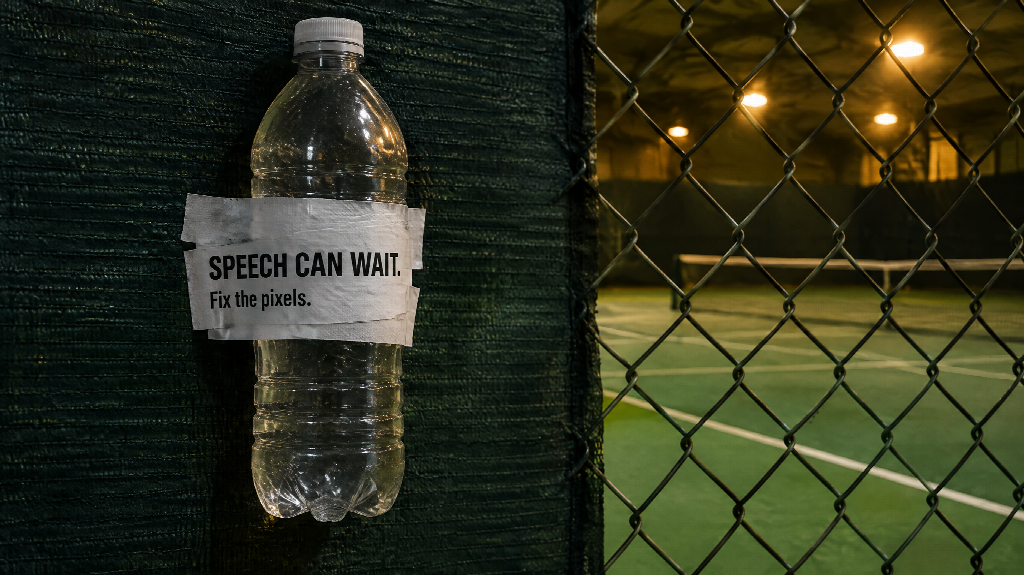
If the photograph is a product, a poster, or a frame you will use again, start with the pixels. Speech can wait, and often should not be added at all.
What prompt-free editing is actually for
Prompt-free, in the useful sense, means you point. You brush the wire, the watermark, the extra cup, the sign in the wrong language. You do not write a paragraph and hope the whole picture is reimagined. The rest of the photo should stay as shot: light, edges, and the object you already paid to photograph.
That is a small edit. It is not a presenter. It will not lip-sync a grandparent, and it should not be asked to. Old portraits and selfies are a different category, with their own consent problems. A catalog image fails when the tool “improves” the bottle while removing a scuff.
Speed matters for a one-person team. Speed that redraws the frame is how a clean export becomes a different product. Read the result at the size it will run. Free passes on this kind of tool may leave a mark. Paid exports can come clean. You still need rights to the file.
Brush the lie. Leave the rest.
When the photo is almost right, the edit is a mask, not a new generation.
AI inpaint is that brush: remove, replace, or add inside the selection so the surrounding photo stays intact. JPG, PNG, or WEBP in. JPG or PNG out. Keep the mask tight. You can add up to two reference pictures if you are swapping a board and you actually have the replacement. Free usage may watermark. It is not a likeness toy. If the region you want to change is someone’s mouth, stop and ask whether you have the right to change that face at all.
Use this before any talking-photo step. A scar, a wire, or last month’s sticker will travel into the video if you animate first. If the whole layout is wrong, a brush is the wrong tool. Go back and rebuild the frame.
When the frame itself still needs a prompt
Some edits are too large for a mask. A new headline, a new crop, a poster that has to hold type through a second pass. Pointing at one corner will not write the lockup.
GPT Image 2.5 is OpenAI’s image model, reached through a hosted workspace, for that pass. Sharper output at larger sizes, cleaner color across repeated edits, a tighter hold on counts, materials, camera, and layout, and more stable fabric, labels, and product geometry. Change the offer. Fix a reflection. Keep the bottle. Then read every character. Generated type still invents letters.
This is not a prompt-free editor, and it should not be sold as one. You are writing instructions because the change is structural. It is also not a talking-photo engine. Eligible trials run on credits you can see before you generate. That is not unlimited free.
If the file must stay a layered design document, generate only the missing piece and finish in the layout tool you already use.
Replacing a person is not the same as making them speak
Face swap, in those roundups, often means a fun clip or a new spokesperson on an old body. Marketing teams sometimes need a narrower thing: the scene, the pose, and the product stay, and a different person stands in the frame. They still need permission. A realistic mouth does not create that permission.
AI character swap replaces the full figure in a photo while trying to keep the original background, pose, crop, and lighting. You upload the scene you want to keep and a reference of a person or character you are allowed to use. It is not text-to-image, and it is not a face-only meme app. Similar pose direction between the two pictures helps. If the garment you are selling changes, the swap failed.
Do this after the still is honest, not instead of checking it. Do not feed a private client, a celebrity, or a stranger from a stock scene you cannot clear. A talking track on top of an unclear swap only makes the problem louder.
 How to choose without a ten-row table
Ask what is wrong. One object in an otherwise good photo: brush it. The layout or the type: use an image model and read the result. The person, with rights in hand, while the set should stay: swap the figure. A presenter you hired, who agreed to be animated: that is a talking-photo tool, and it is a different purchase from these three.
Ask whether a free export is allowed to carry a watermark before you plan a campaign around it. Ask whether you would print the still before you give it a voice. If the answer is no, animation is hiding the edit you skipped.
Prompt-free control is valuable when your hand is more accurate than a paragraph. It does not replace a sentence when the poster is new, and it does not replace a clearance check when a face moves. Clean the frame with inpaint. Rebuild it with GPT Image 2.5 when the brush is too small. Use character swap only when the person is the variable and the scene is already true. Then decide, separately, whether anyone should speak.